With women making up just 27.4% of Australia’s transport workforce, finding new ways to attract diverse talent is a growing priority for industry. SisterWorks, a Melbourne-based social enterprise is entering into commercial partnerships with transport organisations, creating job opportunities for its members while helping to build a more diverse and skilled workforce.
SisterWorks was established 12 years ago as a social initiative supporting and training migrant women towards economic independence. Today, it’s entering into commercial partnerships with transport and infrastructure organisations, giving women experience in the sectors and providing industry with opportunities to attract more women into their workforce and meet social procurement obligations.
The turning point came two years ago when SisterWorks’ #HireHer branding was wrapped around a Melbourne tram as part of Yarra Trams Community Partnership Program. The campaign didn’t just boost SisterWorks’ visibility, it opened the door to business collaborations beneficial to both parties.
“We went in and asked what more can we do,” SisterWorks Chief Commercial Officer, Shamila Gopalan said. “We asked what they needed and then we showed them our capabilities and our workshop.
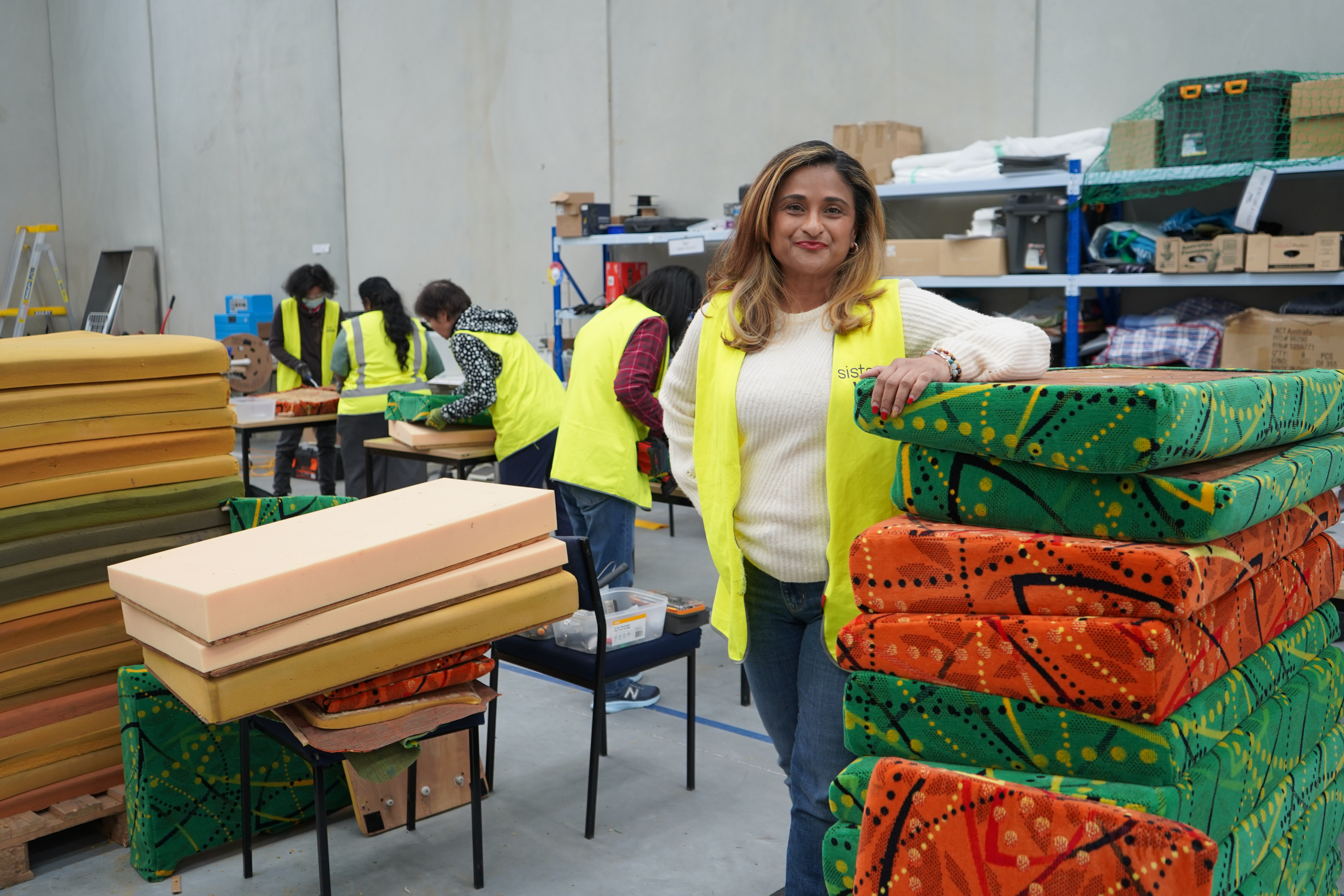
“Our engagement evolved into a shared-value partnership, starting with upcycling old seat covers into tote bags and expanding into seat refurbishment and repair. Yarra Trams has now brought us into their commercial supply chain as a Social Benefits Supplier, helping advance their social procurement goals while generating new revenue streams for SisterWorks.”
Today, SisterWorks is responsible for 80 per cent of Yarra Trams’ seat refurbishment work, along with several catering and upcycling projects.
The transition was part of a deliberate strategy by the SisterWorks team to build relationships with organisations in sectors competing for government contracts.
“We recognised that the sectors that most engaged with social enterprise are sectors that are forced to adopt social procurement. All government contracts in Victoria will have some sort of social procurement and priority job seeker roles. The three key sectors that get the big government contracts are transport, construction and infrastructure.”
With the success of the Yarra Trams partnership, SisterWorks is evaluating how much of the transport industry’s market share it can acquire in its areas of capability.
“We’re talking with major operators such as V/Line, Metro Trains, MR5 consortium bidders, and bus companies, CDC, Kinetic and Dysons,” Shamila said.
Yarra Trams is the largest contract to date and is expected to boost SisterWorks' revenue by 15 per cent annually, but more importantly, it develops migrant women’s capabilities, providing essential skills in rail safety and manufacturing and preparing them for future jobs in rail.
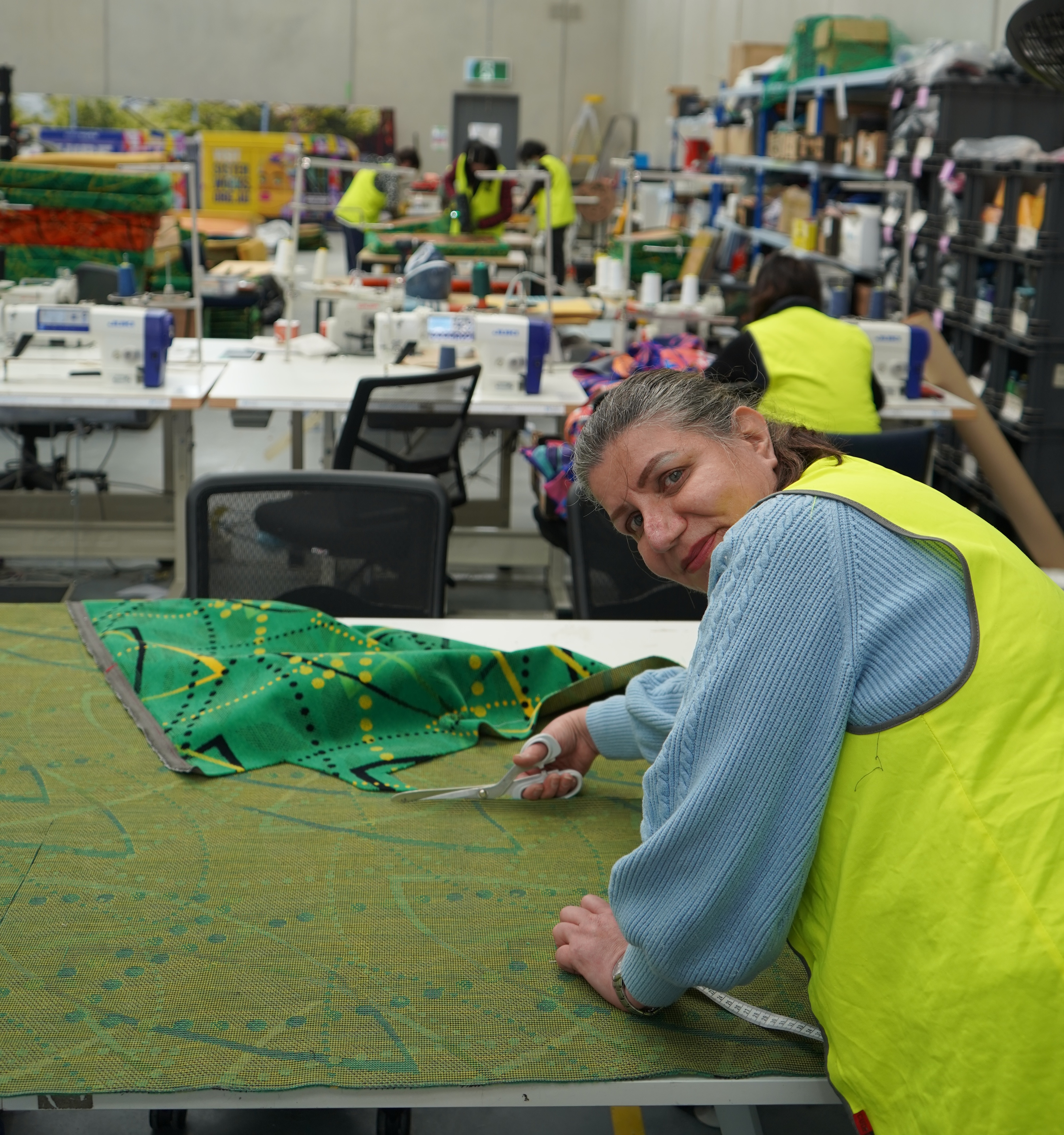
The refurbishment work involves taking old, stained or broken seats, stripping the fabric off the frames, fixing and recovering the frames and cleaning and repurposing the materials into bags and other products.
Farah Shirkool, an Iranian woman who arrived in Australia with her seven-year-old daughter in 2013, started out making candles and heat packs for SisterWorks’ smaller contracts with organisations like Aldi and David Jones. Today, her daughter is studying psychology at university while Farah is leading a team of women working on the Yarra Trams contract.
“When I arrived in Australia my English was not good, so it wasn’t easy,” Farah says. “Now I have a job and I’m training others. SisterWorks has provided that. But most of all it’s given me a community, that’s what most of the sisters here are looking for.”
The Yarra Trams contract has allowed SisterWorks to employ between 40 to 50 women and provided the organisation with 20 per cent year-on-year growth.
They are also partnering with tram and train manufacturer Alstom, repurposing the tarpaulin used to cover trains during shipping.
With each carriage protected by about 300 metres of tarp, and the proposed launch of 100 new trams by next year, that’s kilometres of tarp that would otherwise go into landfill.
“We’ve also worked with Metro Tunnel, repurposing gawk screens, banners, PPE, uniforms, whatever material that’s available,” Shamila said.
“This isn’t a new business model for us. It’s what we traditionally do, bring in waste, repurpose it and give it back to our partners in new forms.”
Since it began in 2013, SisterWorks has created 1,576 hours of employment for priority job seekers, it generates $130,000 annual social and economic impact and diverts over four tonnes of waste from landfills each year.