Meifang Lai, Intelligent Transport Systems (ITS) Technology Manager, Main Roads Western Australia

Published on Jan 29. 2026

This month, National Women in Transport spoke with Meifang Lai, a Technology Manager at Main Roads Western Australia (WA) in Perth. Meifang leads the research and deployment of future mobility technologies, including Cooperative Intelligent Transport Systems (C-ITS), across the State road network in WA. 

At its core, C-ITS brings together vehicles, road infrastructure like traffic signals, and road data to share real-time information. This can include traffic conditions, hazards and the presence of vulnerable road users, with updates delivered directly to navigation apps and in-car systems many of us already use to drive more safely and efficiently. 

Meifang sat down with us to share what she enjoys most about her role, the challenges she faces, and how she balances a demanding career with life as a parent to two young children. 

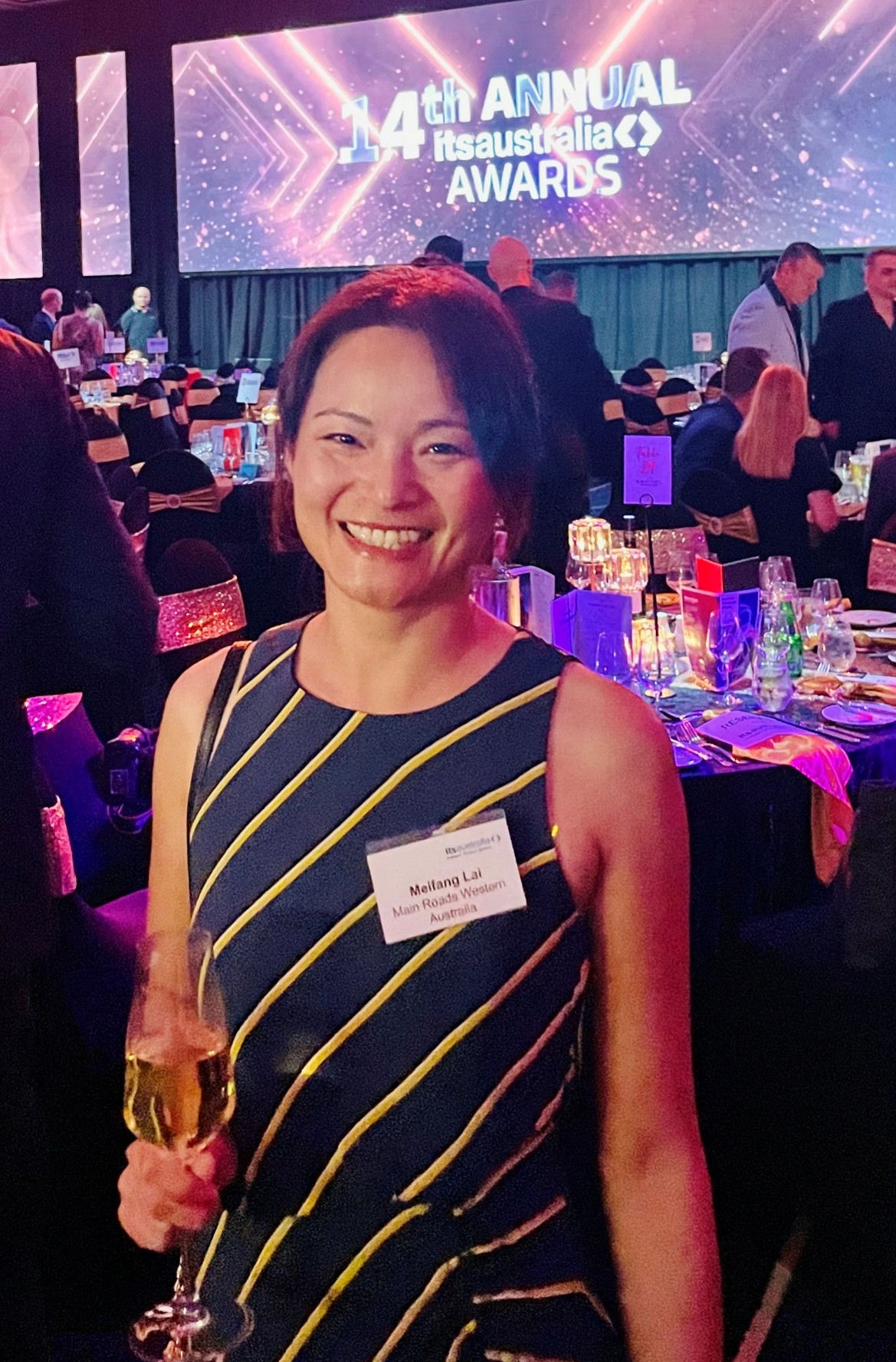
Meifang at the ITS Australia Awards Night

Meifang at the 14th ITS Australia Awards night

Thank you for your time today Meifang. Can you explain more about what you do in your current role and organisation? 

I'm the Intelligent Transport System Technology Manager at Main Roads WA, so I lead the development and implementation of many areas of future mobility including the area of Cooperative Intelligent Transport Systems in Main Roads. My day-to-day job involves exploring new operational technology and see how we can implement it, so our roads are safer for everyone, and we work to achieve the “Towards Zero” [accidents] goal. My role covers not only the technology side of things but also project management and programme management, ensuring everything is planned effectively and fitstogether.  


Can you give some examples of some of the technology you’re working with at the moment? 

One of the projects I'm developing is a Live Traffic WA mobile application. It provides users with information such as, congestion, road closures or travel time information to road users. That information is verified directly from our Real-time Traffic Operation Centre.  

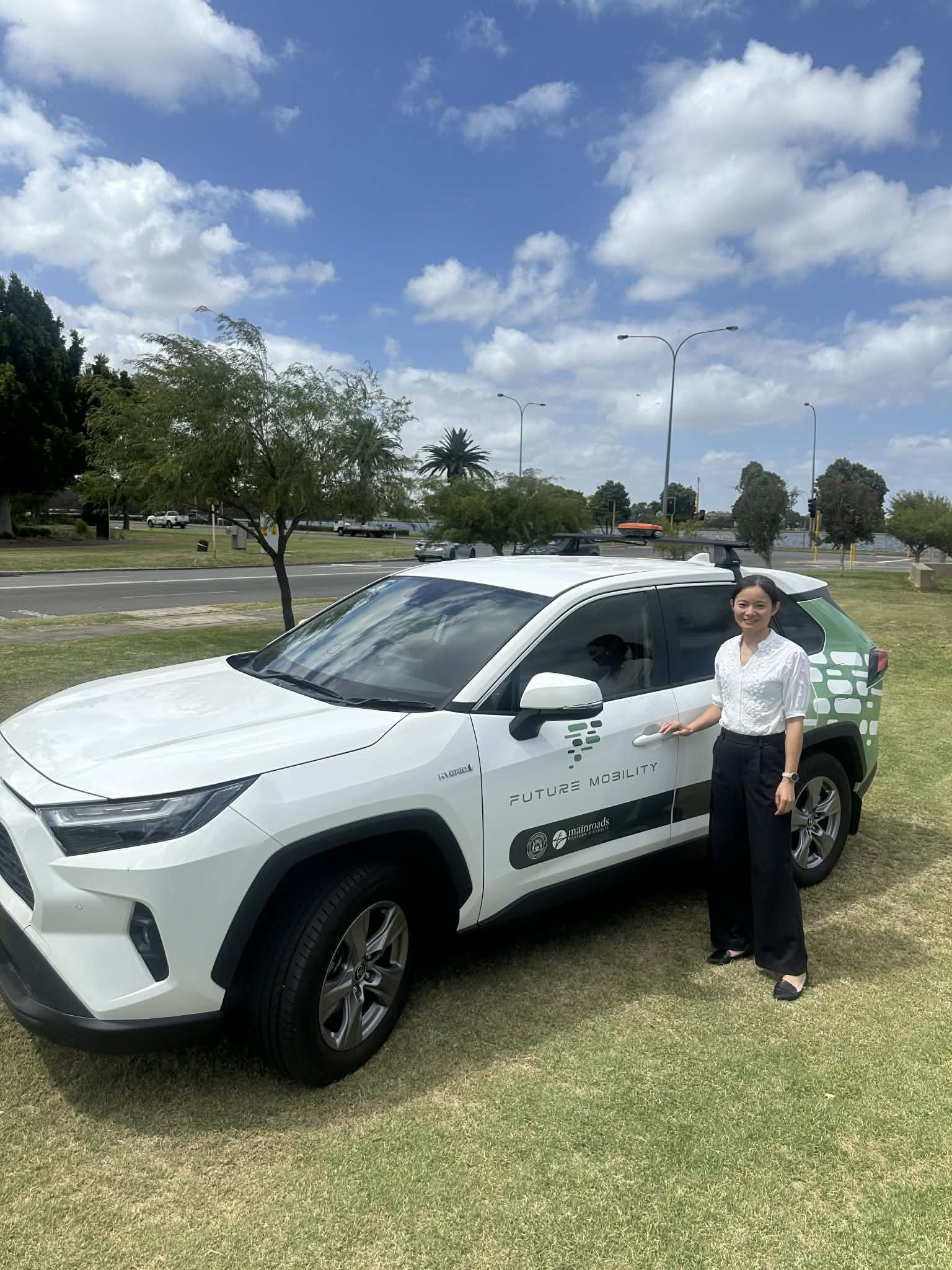
Another program of works I’m leading is the implementation of a Cooperative Intelligent Transport System (C-ITS) roadmap, which includes projects such as the provision of location and event informationfor Main Roads service vehicles. This will include updates on Waze for drivers to pay attention, warning drivers of maintenance vehicles, Over Size Over Mass vehicles or incident response vehicles up ahead on site. We then confirm and publish the information through service provider [apps]. This helps drivers to know if they need to slow down, change lanes or choose an alternative route.  Our projects are about making the daily life of road users safer, better, and smoother.  


That sounds exciting, what do you like about your job? 

I enjoy working with new and innovative technology. It just makes me very excited to be doing something I haven’t done before, especially when it is new for WA and only implemented in a few cities nationally and globally. For me, doing a routine job day in and day out can get boring. I like to learn new things and find different solutions to problems. 

Additionally, I also like working with the stakeholders and the collaboration aspect, we work with a lot of different people, agencies and tech providers to make everything happen. One of the skills I use a lot is adaptability. This work is not predictable. Sometimes things happen that you don’t plan for and you have to change your approach, so you are always learning. I really enjoy that too. You learn a lot of things from different projects working with different people. That is something that really keeps me going.  
 

Is this something you see yourself doing in the long term? 

Yes, I see myself in this type of technical role over the next few years. This is something I want to work on – helping to improve the safety and efficiency of everyday travel.  

I would like to be involved in seeing our C-ITS roadmap through to maturity and implementing these types of technologies across the state. I have a PhD in Microelectromechanical Systems, and I know from doing research that taking things from a concept to implementation takes time.  

In research, feedback loops can be long. I wanted to move into a role where I could see real-world impact more quickly. In my current role, I get to push technology into operation and see tangible results and that’s very rewarding. When you are working on something that improves road safety for all users and road efficiency, you get to see the results straight away or in a relatively short time. In the role I’mcurrently in, I get to push technology out and see it happen, and that’s a great feeling.  


Do you have any particular moment in your career that you are proud of? 

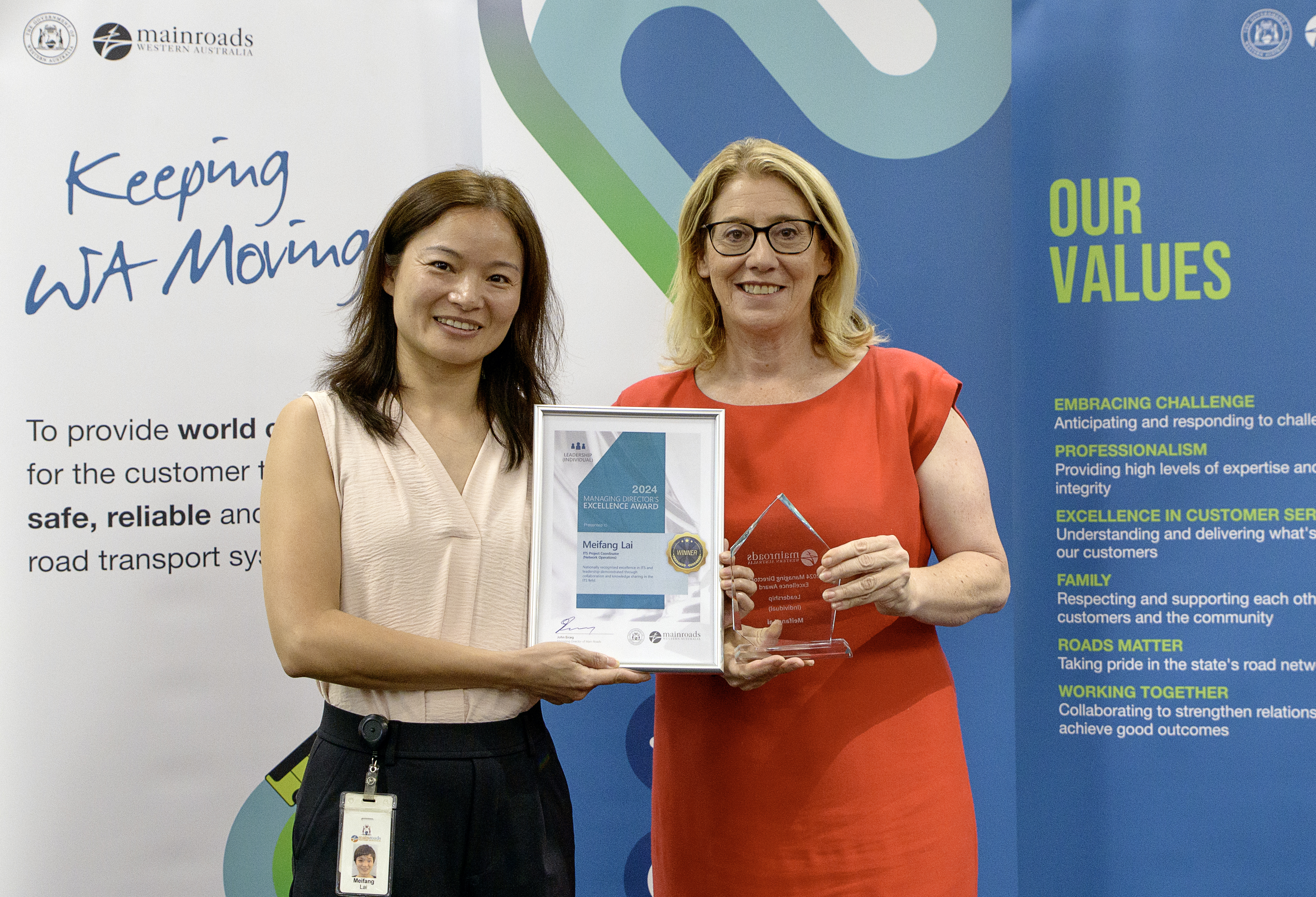
My milestone is around the fact that I never thought of myself as a leader for many, many years. I thought I was a more technical person and that I was happy with that. Then, I started to realise I am actually quite good in leadership roles and I can do well. I got selected for leadership courses and I received two leadership awards: the Network Operations Directorate Leadership Award and the Main Roads Managing Director Leadership Award, last year. This really proves we actually can do it, even if we sometimes doubt ourselves. 

We know that it’s important to deliver the information to the vehicle in real time, so drivers can make safe and timely decisions. This roadmap project is still in development, but soon we will be trialling and demonstrating the technology before we scale up and roll it out across the state.  


image

Meifang receiving the Main Roads Managing Director Leadership Award


What does good leadership mean to you? 

I think it is firstly about being a good role model and then being supportive. Leadership is not about having the leader do everything, it is about how you can enable your team to do the work. Allow your team to strive and learn and they can progress. You and the team can achieve your goals together.  


Can you share some of the challenges that you've faced in the sector? 

I have found that learning and understanding technical information has been okay for me, because I just need to reach out and ask. There are experts and people who are always willing to help, if you are willing to learn. This makes things easy to solve.  

The bigger challenge for me, over many years of my career, has been when I feel like I need to put effort into being seen and being heard. Especially for me, being a quieter person. I used to only speak when I was sure I was 100% correct. This was a really big challenge for me to overcome. Now I would say, it’s ok to be doubtful, it’s ok to speak up, even if you are not 100% sure. It’s important to be seen and heardand then discuss opinions. As a female and as an Asian female, in a place like engineering where it’s quite male-dominated, I felt pressure to always be technically perfect. But once you establish credibility, you can feel safe to contribute more openly and the people at Main Roads have supported me to ensure my voice is heard. 


How did you push yourself to achieve more and be more visible? 

I talk to myself and ask, what is the consequence if I say something wrong? It becomes okay because I am also in a safe environment. I’m lucky that I have been in workplaces that are safe to speak up. In my team we can have a discussion and talk through everyone’s ideas and opinions. That is what good team environments look like. In the past, there have been times when I haven’t spoken up and haven’t said anything and things turned out exactly how I was thinking. So, I would say, believing in yourself is important.  


What does your role and area look like in terms of participation and visibility of women? 

I'm currently the only female in my branch and we have almost 20 people. A few women come and go, but not many tend to stay for long, maybe because it is technical. In the broader field, we are encouraging women into STEM and have many opportunities for leadership roles in these technical areas. Main Roads WA is a state government agency and have flexible working arrangements which makes it a great and supportive place to work.  

Locally, there might not be a lot of women interested in this type of work, but nationally I’m seeing a growing number of women pursuing careers in this area. There seems to be a strong push to get young ladies interested in STEM and to encourage women into leadership roles. I can see in the future it should be better and better.  

I am still surprised that the ratio of girls in engineering degrees is not as high as I would expect in a developed country like Australia. I’m not sure why, maybe public perception of engineering being difficult.We have a long journey to go to change the perception.  


Do you have any advice or thoughts you'd want to share about being in your role?  

The technology side of things is quite exciting. Technology changes in the transport sector are moving rapidly, which means there are so many new things happening and many opportunities. It’s a really interesting period to work in the transport sector, with technologies shaping the future like connected vehicles, autonomous vehicles and AI all happening. It’s rapidly changing and challenging with enormous potential to shape the future.  


In terms of your personal life, how does having a family with two small children fit into your overall schedule? 

Yeah, it has been challenging, especially the first few years. I think one thing I had in mind when planning for kids was that I don't want to give up my career for children. I took maternity leave and then returned to work full time. This means I have been super busy for the past few years. But I am lucky that my husband is very supportive, while also working full time as an engineer. We share household chores, cooking and other things while training the kids up so they can help too.  

My husband does the morning drop off and I do the afternoon pick up for schools. That means, my time is super valuable for me. Sometimes I don’t have five extra minutes to talk because I need to go home and pick up the kids. I need to wake up at a certain time otherwise I won’t have enough time to do everything and get our lives sorted.  

One thing I want to highlight is that women usually are really good at organising. As there are many things to plan for, both work and personal life, and you have to find the time and energy. Getting support from friends and family is super important too. Occasionally when I really need a break, I would take some time off and ask family to help taking care of the kids. This gives me a chance to recharge and focus on myself.  
image

Meifang with a Cooperative Intelligent Transport System (C-ITS) test vehicle