We spoke with Amanda Bradfield, Director at End to End Logistics and former Head of Freight and Logistics at the Freight and Trade Alliance (FTA). With a lifetime of experience in the freight industry, Amanda brings a deep well of insight and real-world stories. After spending 28 years at her first role with EES Shipping, an international freight forwarding company based in Perth, she later carried that extensive experience into her role with the FTA team.
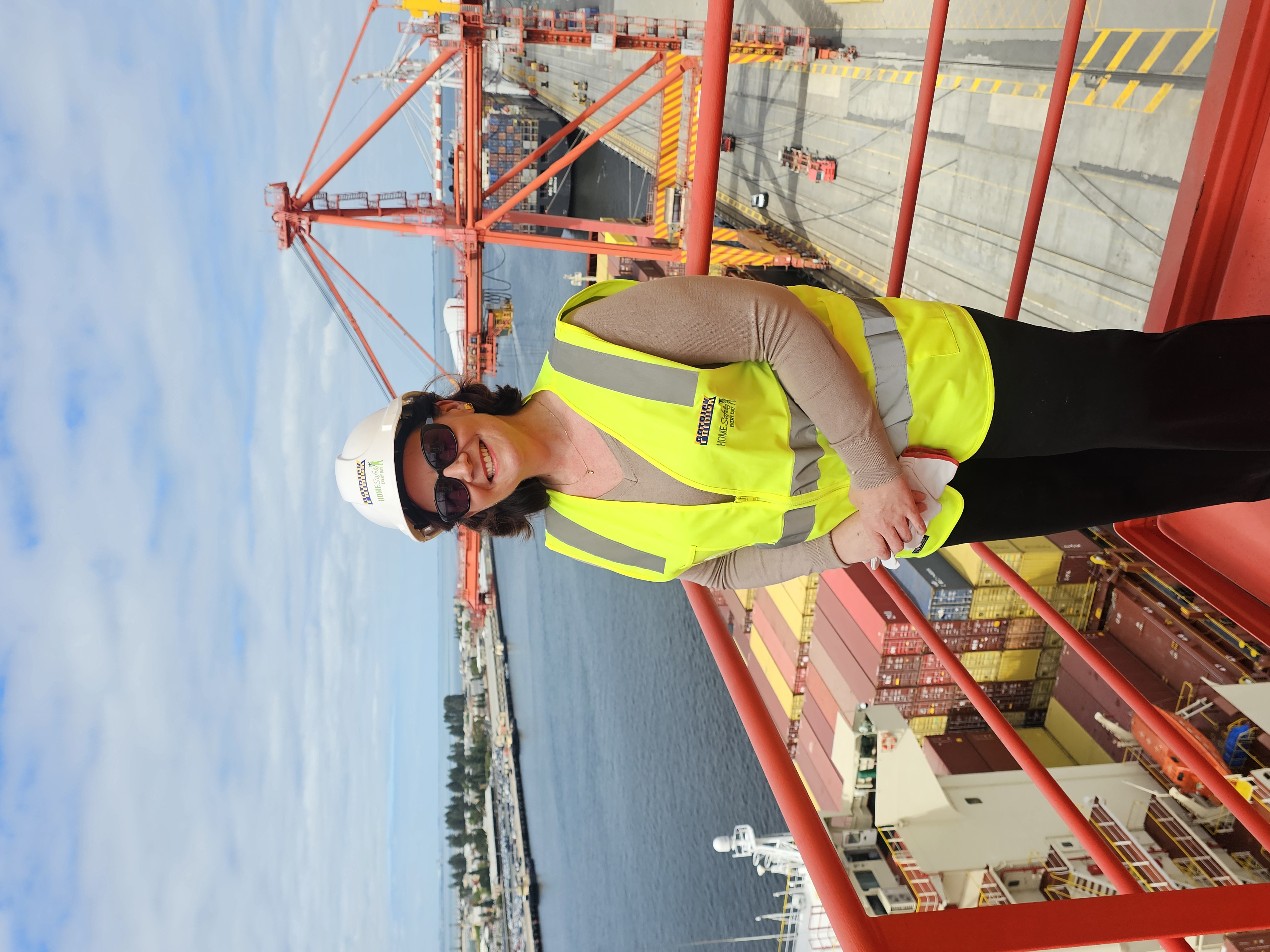
Amanda at Patrick Terminal, Fremantle
In this interview, Amanda reflects on her unexpected start in freight forwarding at 17, how the industry became a lifelong career, and what it’s really like to work in a 24/7 global sector. She also shares her views on the skills that matter most, balancing family life, backing yourself, and why stronger female representation in leadership is vital for the future of freight and logistics.
Can you describe some key milestones in your career?
I actually started out in freight forwarding when I was 17 years old. I didn't know anything about the industry. I certainly wasn’t thinking about how goods got into shopping centres. I left school at the end of year 10 and didn’t do any tertiary education, but I went to a job placement agency and they got me an interview with a local freight forwarding company and I ended up staying there for 28 years. After that first interview I’ve never looked back.
When you are 17, you're still getting your head around everything. At what point did you think to yourself, I can make a career out of this?
It's funny because I don’t know if I thought about it. I wasn't really a career orientated person back then. I was working at a local, family-owned and operated business here in WA, it was a small, boutique freight forwarder. I started out as a ‘runner’, and I went around to different places and picked up documents and took those documents to other places. It wasn't until after I had my kids that I grew into the managerial side of things. Once the kids were older and didn’t need me so much anymore, I went from part time to full time work and that’s probably when I started to sink my teeth into it a little bit more.
How old were you when you had your first child?
I was 27 and I had a four-year gap between the two girls. I was fortunate that their dad was more of a stay-at-home dad. He worked at night and I worked during the day, so it worked out well and we didn’t have to pay for daycare.
Could you have done it without your partner being the stay-at-home carer?
I don't think so. I don't think it would have been possible. Logistics is not your usual 9-5 job because there is so much out of scope, like getting phone calls or emails at all times. Supply chain work is 24/7, you’re working across different time zones.
Are there other things that are challenging about this role?
If you're a problem solver, if you're a do-er, I don't think so. So many people have jobs where they are stuck doing the same thing day in, day out. One thing you'll find with transport and logistics across the board is that no two days are the same. I’ve heard a lot of people say, we are gluttons for punishment in this industry - but that’s the thrill of problem solving, getting the job done and you can thrive on it. A lot of us chase that and I would say job satisfaction here is quite high. It’s such a wonderfully rewarding industry.
When you’re good at your job, it has longevity, it has the ability to make you feel part of something and that’s super important. During COVID in particular, we all found that the problems brought us all together. It was a hard time, but it was also a good thing. In this industry, we tend to pivot well and just get on with it.
In terms of necessary skills for your job, we’ve covered problem solving, being goal-oriented and collaboration, are there any other major ones?
The other C word is communication. It is key in this job and anywhere across the supply chain. If you don’t tell your clients what’s going on, they don’t have the right information and we are the experts. We’re the ones that are supposed to know where their freight is. That’s what our end-clients are craving, constant communication, someone that will pick up the phone and have a conversation with them. Digitisation has done a lot for the industry and people can easily look things up on a tracking site, but there’s a lot to be said for picking up the phone and being able to talk to a human, rather than sending an email and hoping for the best.
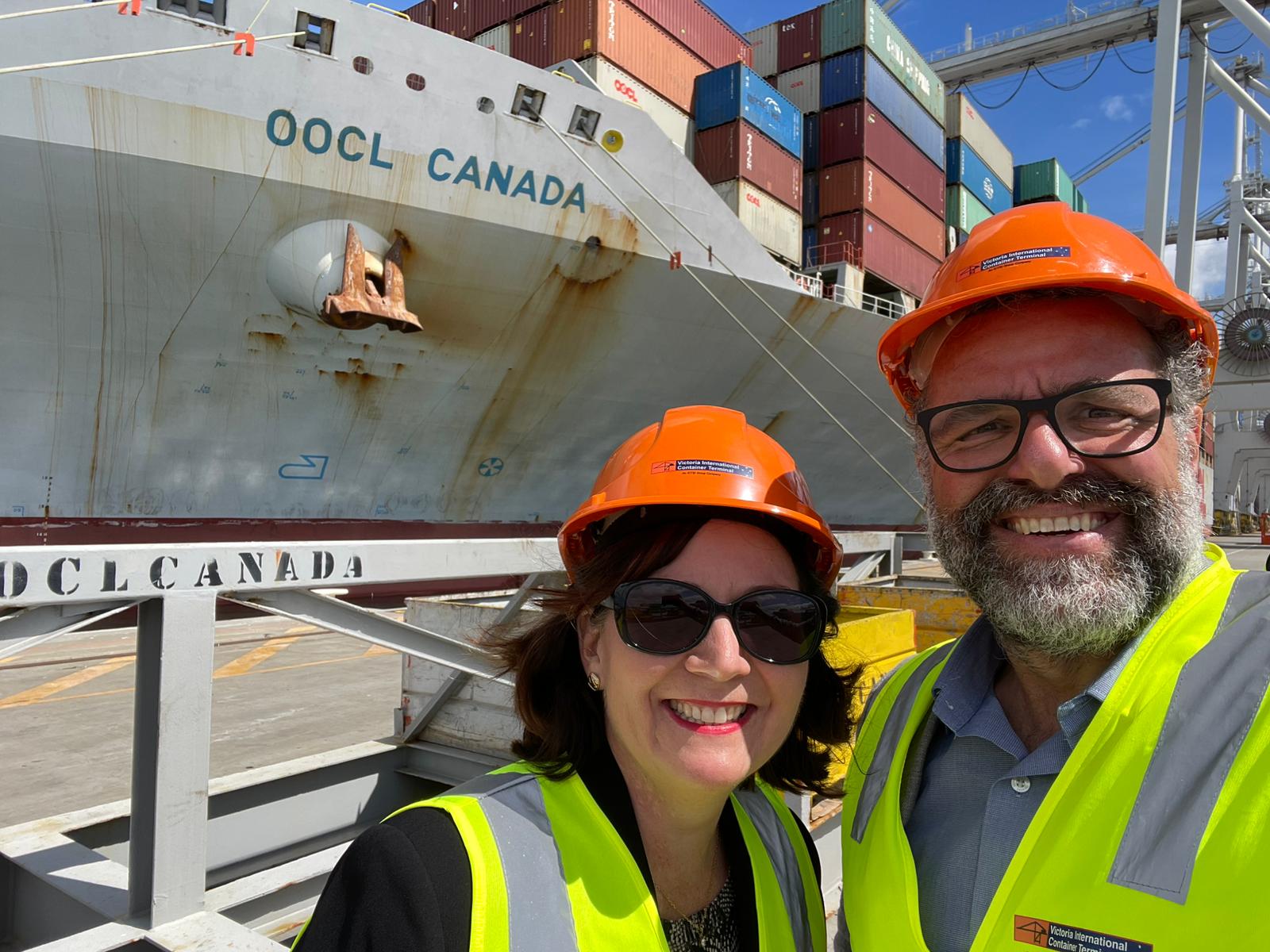
Amanda and Sal Milic at Victoria International Container Terminal
What would you say are specific opportunities for women or why would women be interested in a role in this area?
Multitasking! Women are amazing multitaskers. You can never really finish one task and move on to another with logistics and transport. You’re always doing 15 things at once and you are watching how those things are progressing while thinking about, what’s for dinner, what are the kids having for lunch, what else is going on. This is something women can grab a hold of and it’s part of their toolbox of skills.
Women typically have been in the sector in admin roles, not leadership roles. The bigger corporations don’t always have women at their boardroom table, and we need more women to bring a different element to the conversations. In management ranks, women are more represented, in freight forwarding at least. But the higher you go up, that’s where we need to use our voices more and making ourselves known and backing ourselves. We don’t believe in ourselves. We hold ourselves back by thinking – what if it doesn’t work, what if I make a fool of myself, by why does it always need to be a negative ‘what if’? We have to spin the narrative. What if it does go well? We should all remember that.
Is that what you've done?
For sure I’ve had a lot of moments of doubting myself. But I think that to grow, you've got to feel uncomfortable, and it’s important. And like I said, trying to back myself and don’t automatically think about how bad it’s going to be, think about how good it could be. Generally nine times out of ten, it turns out alright and you will pick yourself up after that tenth time and keep going.
Can you give me a specific example of when you have seen a really positive benefit of pushing yourself?
I would say LinkedIn is one of the big things. It’s been a strange place for me to push myself and get a bit more out there. A lot of the times, you think it’s cringey and nobody wants to hear it, but then when you receive positive feedback and positive momentum you can see it’s not that bad.
If you can put up with some cringiness, it can be beneficial. I’ve grown my following from a couple of hundred to about 15,000 with people all over the world. I’ve got worldwide connections from various people from different fields involved in shipping and transport with connections and conversation in that small community. I don’t know everything, but when I post something and it gets good comments, and some good interactions, it becomes something that build tangible growth.
You’ve been nominated for a few industry awards including, but not limited to being a finalist in the 2023 Women in Industry award and as a finalist recently for Women in Shipping and Maritime. What does it mean for you to be picked out for your nomination?
It means a lot to me. Being a finalist is a fantastic thing and it’s a fantastic showcase for talented people across the industry. Now I’m trying to give back to some of the younger girls that are in the industry and are also in freight forwarding and talk to them about what’s going on for them.
My final piece of advice would go back to, backing yourself and giving things a go. You know, I think that's a that's a big thing here. Freight logistics is a great industry and there are lots of places to grow. You’re always learning, and I would say I’m still learning, to this day. Each day I still learn something new.
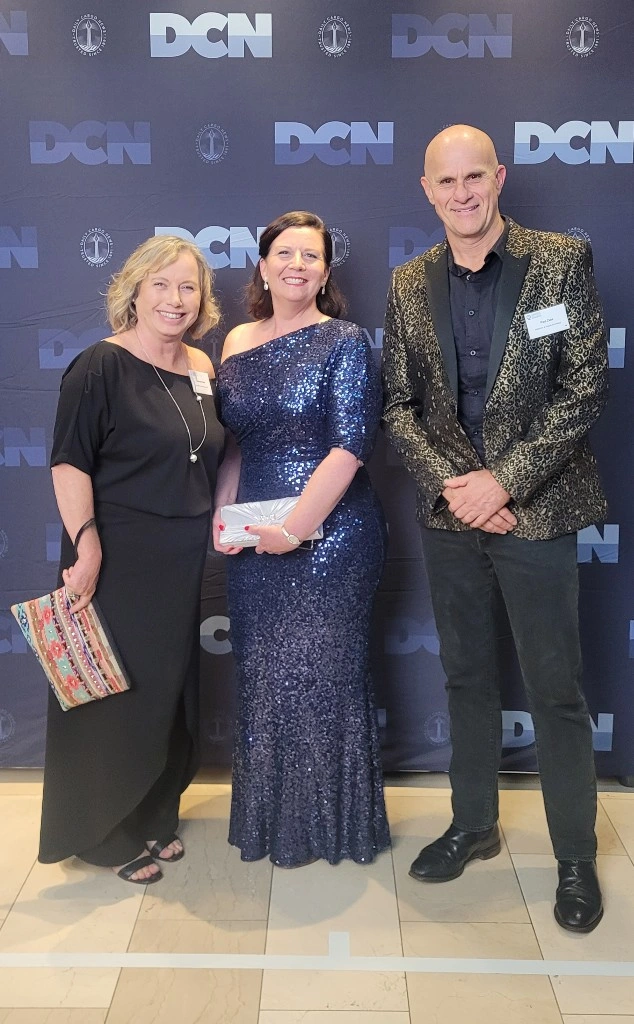
Amanda at the DCN Awards 2026 with Paul and Caroline Zalai, Directors at Freight Trade Alliance (FTA)