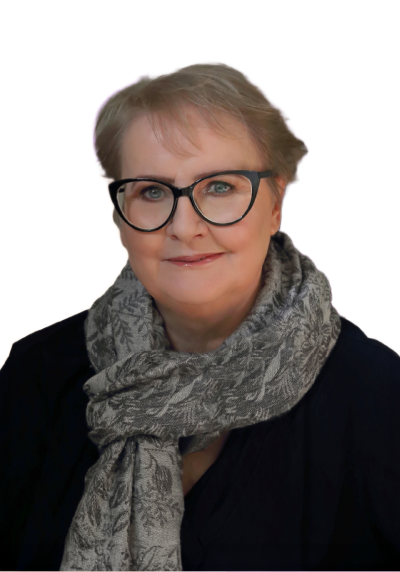
Jacquelene Brotherton
Director | Transport Women Australia Limited

"We have so many incredible women role models in transport … we must more broadly showcase their stories and the opportunities across the industry."
Current positions
- Principal Consultant, J Brotherton & Associates
- Director, Transport Women Australia Limited
- Board Member and Treasurer, National Rural Women’s Coalition
- Program Host, Import Export TV
- Digital Transformation Advisor, ConnectAuz
- Member, Committee for Wyndham
- Member, Women in Trucking USA
- Member, Women’s Trucking Federation of Canada
Previous positions
- Compliance, Safety and Culture Manager, Sargeant Transport
- Transportation Manager, Lineage Logistics
- Transport Manager, Oxford Logistics Group
- Transport Operations Leader, Pure Logistics
- Linehaul Operations Manager (VIC), Roadmaster Group
- Linehaul Manager, O’Brien Transport Services
- Livestock Operations Manager, Lewingtons Transport
- Transport Manager – Local, ARN Logistics
- Assistant Operations Manager, Frasers Livestock Transport
- Fleet Manager, Finemores Fleet Management
- Depot Manager, Lewington Transport
- Senior Accounting Assistant, Oakey Holdings
- General Manager, Bruce Dickinson Transport
- Chair, Transport Women Australia Limited
- Board Member, Australian Gender Equality Council
- Chair, Transport Committee Refrigerated Warehouse and Transport Association of Australia
- Committee Member and Secretariat, Livestock Transporters Association of NSW
- Transport Manager and Liaison, Conbar Transport and Sandhu Pannu Transport
Career snapshot
Jacquelene Brotherton has worked in the transport and logistics industry for over five decades and her many and varied roles have included livestock, general and refrigerated transport as well as fleet management, training, and compliance.
She has her own consulting company, J Brotherton & Associates, works as a television host with Import Export TV, and as a Digital Transformation Advisor to ConnectAuz Pty Ltd. Involved with many industry associations, she is the Immediate Past Chair of Transport Women Australia Limited, a member of Women in Trucking USA, plus the Women’s Trucking Federation of Canada. She is also the Vice President of the National Rural Women’s Coalition.
She has been a Life Member of the Livestock Transporters Association of NSW (now LBRCA) since 1998; this was bestowed for her contribution to the group. In 2018, she won both the Excellence in Road Transport Award at the Women in Industry Awards and the Inaugural Female Leadership in Transport Award at the Australian Freight Industry Awards. In 2019, at the prestigious Wyndham Business Awards, she won the Businessperson of the Year Award. In March 2023, Jacquelene was awarded the Australian Trucking Association’s Outstanding Contribution to the Australian Industry Award.
She is now sharing her passion with future generations of people who are being encouraged to join the industry.

In her own words
My parents bought the North Bourke roadhouse in August 1970 and that is when I joined the industry. We were the last fuel stop before crossing the Queensland border and we had a well-used phone box at the front of the store, as this was before mobile phones. When I was 13, I would get straight off the school bus, change out of my uniform, and work in the store.
My parents were extremely supportive, but you were expected to work hard. My Father was a drover so as soon as you could ride a horse you were following sheep six miles a day. What I learnt from an early age is that it is important to work hard, be honest, your reputation is everything and that girls can do anything. Dad believed there were no doors not open to his daughters and that was quite different to the thinking of the day. He drilled into each of us seven kids that it did not matter what you did, as long as you were the best you could be at it - whether you were the street sweeper or the prime minister. You had to give it your all and make sure you took on what you really wanted to do.
In 1978 I joined a livestock transport company and built my career over the next 17 years with them, including an opportunity to serve as a committee member of the Livestock Transporters Association of NSW. The Association lobbied for better conditions, and I took on the secretariat role, organised conferences and wrote their newsletters. I was the only woman and close to the youngest on the committee and I loved it.
After my marriage ended, I worked in different jobs across the industry, and across different cities.
In 2001 I moved out of livestock transport for the first time into general freight to learn new skills and worked in fleet management, compliance, and safety. In 2007 when I shifted into warehousing with Oxford Logistics Group, I became involved with the Refrigerated Warehouse and Transport Association of Australia and Chair of its transport committee. I also advocated for better roads as Chair of Wyndham Industrial Liaison Development (WILD) committee, and I became very involved in the local community. We successfully advocated, with the local council, for the $53 million upgrade of what had been a goat track into a beautiful new road and that is something of which I am proud.
I joined Transport Woman of Australia Limited (TWAL) as a member in 2003 and took on the role of Chair between 2009 and 2011, and again from 2017 to 2025. We made great progress with our lobbying and programs at TWAL including the mentoring program, the Driving the Difference scholarships, the Trish Pickering Memorial Award, the Dream Maker Awards, and the Young Gunnette Award.
TWAL also joined the National Rural Women’s Coalition of which I am the Vice President, and having come from outback Australia, this resonates with me quite a bit. The Coalition approached TWAL because they did not have a transport representative on its Board, and it is a great synergy for them.
Change the words, change the world
We have so many incredible women role models in transport, but we tend to give them an award and send them into the sunset. We must showcase their stories more broadly and the opportunities across the industry beyond driving.
We also need to upgrade our image and we had our first best chance during covid when people realised the importance of trucks when did not have toilet paper on their supermarket shelves. We were classified as essential workers and we need to keep that front of mind with the general public. Without us you can’t survive. I say: ‘it doesn’t matter what you eat, wear, or sleep in - it came on a truck.’
Within our own industry we are great at promoting our great stories, but we don’t extend that into a conversation with the general public. I accept as many opportunities as possible to speak at conferences and forums about how wonderful the transport industry is and its importance within the community. I am so enthusiastic people can tell I love transport and they want to learn more.
I talk to a lot of employers who ask me: ‘how do I find more women?’ The very first thing I say to them is: ‘look at your recruitment advertisements. Even though you say everyone is welcome to apply, and you say you are an equal opportunity company, you are not saying how the job will fit in with their lifestyles.’ You must make it explicit that women will be welcomed in the organisation and industry. Some transport companies have not changed their job advertisements for 10 years! Language is so important. We made a rule in 2022 that the TWAL Board Members were not allowed to talk about transport being a ‘male dominated’ industry. Instead, the accepted language is: it is a ‘predominantly male’ industry. Men don’t dominate us - they support us - and unless you change your words you can’t change the world.
We definitely need more women and young people, but we should also look to attract our immigrants, refugees, returned soldiers, and post-covid change of career people because there are just so many opportunities and diversity of roles available to them.
My vision for the next five years is …
…trucking has always been a leading adopter of new technology and that will continue, there will be more diversity in our workforce, and we will be proudly promoting and selling our wonderful industry.