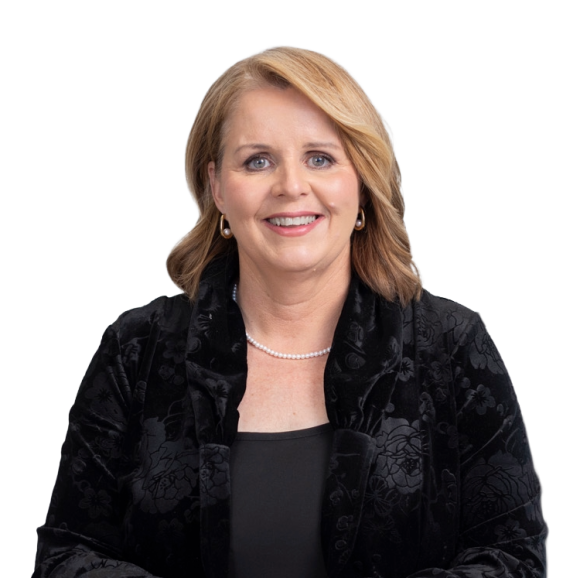
Nicole Rosie
Chief Executive Officer | National Heavy Vehicle Regulator




“Making progress and challenging outcomes within the transport sector can be hard and complex. In many cases there are no 'wrong' or 'right' answers - progress in this context is about compromise and taking the next best step.”
Current position
- Chief Executive Officer, National Heavy Vehicle Regulator
Previous positions
- Chief Executive Officer, NZ Transport Agency Waka Kotahi
- Director (emerging) Mercury Energy – NZX Gen retailer
- Director, Auckland Transport
- Chief Executive, WorkSafe New Zealand
- Director, Construction Health and Safety NZ
- Board member, Safer Farms
- Director Health and Safety & GM Risk, Farm Source Director, Fonterra
- GM Safety and Policy, KiwiRail
- GM Risk and Strategy, Toll NZ
- Health and Injury Prevention Manager, Fletcher Challenge Forests
Career snapshot
Nicole is passionate about making a difference to people and has been drawn to roles that link economic success with care for people. As a natural system thinker and integrator, Nicole’s career has been focused on aligning interests across systems, organisations and the public and private sector to support a flourishing society that looks after all people now, and for future generations.
From her early roles as Health and Injury Prevention Manager at New Zealand’s Fletcher Challenge Forests where she significantly improved the company’s safety and sustainability credentials to leading roles with multinationals Fonterra and Toll, Nicole believes the biggest change can be made through aligning interests, across organisation collaboration and through a commitment to care for people.
Nicole was Chief Executive at WorkSafe New Zealand and the NZ Transport Agency, Waka Kotahi (NZTA) before moving to Australia and taking on the role as head of Australia’s National Heavy Vehicle Regulator.

In her own words
All my career, every move I’ve made has been about creating greater impact, helping society grow and flourish through economic success. At an organisational level that is about being clear on the outcomes you are seeking to achieve, working effectively with others, excellence in operational and WHS practices and introducing leaner, more entrepreneurial ways of working.
When operating at a system and across government level, improved social and economic outcomes can only be achieved through aligning interests, collaboration and adopting a very deliberate focus and approach to ensuring agreed outcomes are being achieved.
Success for me, is knowing that when I leave a role, the legacy and achievements I’ve helped to build will endure.
Much of my work has been supporting teams and leaders through system, cultural and organisational change. One of my very first jobs was at Fletcher Challenge Forests in New Zealand where I was put on a site that had the worst health and safety performance in the Fletcher group of companies and a terrible environmental record. We turned that around. People were moved off dangerous activities, and we significantly improved safety, sustainability and environmental outcomes. Within a year and a half, they were the best performing health and safety site in the group, and we had mitigated environmental impacts significantly. Reducing risks and getting people better looked after saved Fletcher Challenge millions of dollars.
I did this at a bigger scale at multinationals Fonterra and Toll NZ (now KiwiRail), helping to improve their regulatory relationships, HSE and business performance. I got to do the same at a national level as Chief Executive of WorkSafe New Zealand. By encouraging Boards to have greater involvement and ownership, we were able to lift industry interest in health and safety performance to record levels.
Going to NZ Transport Agency Waka Kotahi (NZTA) gave me the opportunity to make even greater impact. When you talk about caring for people and economic success, at the heart of that is transport. If you don’t have effective transport networks you can’t get food, clothing, water, shelter, or other basic needs met. During my time leading NZTA we delivered a number of transformational infrastructure projects, modernised and standardised the NZ transport sectors’ digital standards and platforms and had the biggest reduction in road deaths and serious harm in 15 years.
In my current role leading Australia’s National Heavy Vehicle Regulator (NHVR) there are huge opportunities to gain greater consistency across systems and approaches so we can meet those bottom-line outcomes around improved safety, productivity and sustainability for Australia’s transport system.
The long game
To make real progress in the transport sector we need to lead differently and challenge our thinking and approach. Attracting younger people, women and people from different cultural backgrounds requires a paradigm shift. You must be prepared to fundamentally change your systems, your processes and the way work is organised. As the saying goes, we cannot keep doing the same thing in the same way and expect a different result. Progress demands that we challenge old habits, rethink familiar approaches, and be willing to change to achieve something different or better.
I still sit is in many conversations and dialogue that link “success” in the transport sector to driving longer, faster and working harder. That mindset reinforces a way of operating that feels stuck in the past.
When you think about the challenges; - digitisation, automation, sham contracting, driver shortages, higher input costs, low margins and few restrictions to entry– these are not issues that can be addressed by working harder or driving faster.
If you just look at the diversity challenge and how to attract younger people, women and other groups to the sector – to do this, the way work is done needs to change, - practical issues like toilet facilities, prayer rooms, and the long periods drivers spend away from home.
The transport sector needs to continue to broaden our conversations and be willing to challenge and change our underlying beliefs, practices and approaches to respond to the challenges and opportunities the sector faces.
Coping with discrimination
Change is rarely comfortable. People naturally resist it, which means there will always be someone who disagrees with progress, changes, or with you personally. Very early in my career I learned to live with that discomfort and with the reality that people will form opinions about me.
I’ve experienced many instances of poor behaviour and discrimination. Early on in my career as a young executive it was not unusual to be doing team talks in lunchrooms where the walls were covered with pictures of naked women. On another occasion, I was told I wasn’t being considered for a major role because I was about to have my first child and the role required a lot of travel. The job ended up going to a man who was expecting his fifth child.
There are double standards still that women face. This is not a woman or man thing but more about societal norms and expectations. Once you become aware of unconscious bias, you start to see it everywhere, all around you, all the time. You even notice it in yourself.
To navigate this, you have to be resilient. Having a strong support network is important. I’ve been fortunate to come from a family that gives me strong support and self-confidence. It’s important to know your own value, independent of work and what others might think or say.
My vision for the next five years is...
…that Australasia becomes the go-to place in the world. The opportunity of the Olympics, energy zones and economic growth is incredible- we need to grasp it with open hands and use this opportunity to transform the way we collaborate, engage and deliver. We have a unique opportunity to be the change that we want to see in the world and to demonstrate world leading collaboration, problem-solving and innovation.